
Every highway crew knows the sound. Tires on the rumble strip, a horn, the flash of headlights where they shouldn't be. By the time anyone looks up, the vehicle is already inside the cones.
A work zone intrusion alarm system exists to move that warning earlier. Instead of a worker noticing the danger, a sensor notices it first and gives the crew seconds to react. This guide explains what these systems are, how they work, what the 2026 rules say, and what to look for when specifying one.
A work zone intrusion alarm is a device, or a network of devices, that detects when a vehicle enters the protected work space and immediately warns workers. The Federal Highway Administration's Every Day Counts nighttime work zone initiative describes them as "automated intrusion alarms (which alert workers when a vehicle enters a work zone)."
The core job has three parts:
Older systems were mechanical. A vehicle hit a pneumatic tube or knocked over a sensor-equipped cone, and a horn went off. The alarm fired at the moment of intrusion, not before it. Modern systems use radar, video, or both to watch approaching traffic and predict an intrusion before the vehicle reaches the taper. For a primer on how those sensors compare, see our post on HD3D radar versus traditional traffic sensors.
Work zone crashes are not falling the way overall traffic deaths are. NHTSA's early estimate puts 2025 traffic fatalities at a record-low rate. Yet the 2026 AGC and HCSS Highway Work Zone Safety Survey of more than 700 contractors found that 60 percent had at least one crash involving a moving vehicle in their work zones in the past year. Nearly a third reported five or more. More than half said the risk is greater than a year ago, and only 4 percent said it had declined.
The injuries fall on both sides of the cones. Among contractors who had a crash, 27 percent reported injured workers and nearly three fifths reported injured drivers or passengers.
Nighttime work makes the exposure worse. FHWA reports that roughly half of all fatal work zone crashes in 2023 happened at night, and that speed was a factor in more than 30 percent of them. As agencies push more paving and maintenance into overnight windows, more crews are working in exactly the conditions where drivers are most likely to be tired, fast, and distracted. Our post on why on-device edge processing matters for traffic safety explains why reaction time is the whole game in those conditions.
Intrusion alarms are named directly in federal regulation. Under 23 CFR 630.1108, agencies must consider positive protection and other traffic control measures for work zones that put workers at increased risk. Intrusion alarms appear in that list of measures, alongside options like law enforcement presence and speed management.
The rule also sets a floor. At a minimum, agencies must use positive protection devices in work zones with high anticipated operating speeds that give workers no means of escape from intruding traffic, unless an engineering study determines otherwise. Situations that trigger this evaluation include:
Two other 2026 milestones shape how states write their specs. Every state had to adopt the 11th edition of the MUTCD, or a conforming state version, by January 18, 2026. And FHWA's Every Day Counts round 8 is actively helping state DOTs deploy automated intrusion alarms and better lighting on night projects. The practical result is that intrusion detection is showing up in more state DOT contract provisions, particularly for nighttime interstate work.
The current generation replaces tripwires with sensing. Here is what separates them.
Radar detection. Radar measures the speed and distance of every approaching vehicle, day or night, in rain, fog, or dust. It can tell the difference between a vehicle that is slowing for the taper and one that is not, which is what makes early warning possible.
AI video. A camera with on-device AI adds vehicle classification and keeps a visual record. It also filters false alerts. A radar-only system may trigger on a vehicle that drifts toward the buffer and corrects. Video confirms what the radar saw.
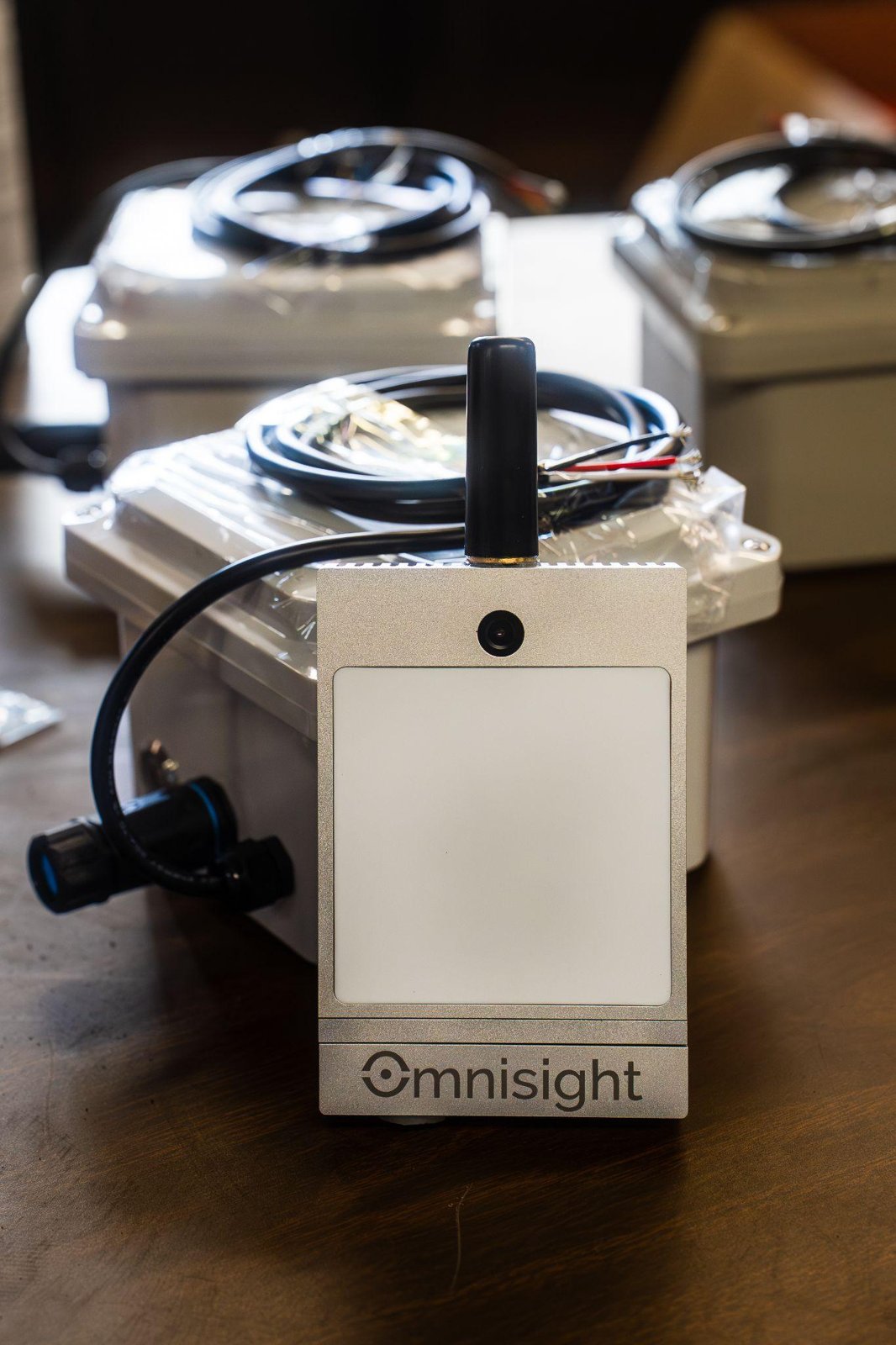
Sensor fusion. Combining both gives you the reliability of radar with the context of video. The system can fire a confident alert in a fraction of a second and store the clip for review. This is the same approach behind FusionSensor, our roadside device.
On-site alerting. The alert has to cut through jackhammers and diesel engines. Air horns and LED strobes are the baseline. Wearable haptic alerts, which vibrate a vest or helmet, reach workers who cannot hear a horn or are facing away from traffic.
Off-site notification. SMS, email, and dashboard alerts let safety managers and traffic management center operators see the incident as it happens.
Event logging. A system that records every intrusion and near miss gives you data. Over a season, that data shows which setups, times of day, and locations produce the most close calls.
The Work Zone Safety Information Clearinghouse maintains a broader library of guidance on intrusion countermeasures if you are building a spec from scratch.
FusionBLADE didn't start as a product idea. It started as a question from the Missouri Department of Transportation. At the TRB Annual Meeting two years ago, MoDOT's work zone safety lead stopped at our booth and asked whether our radar-and-video sensor could watch the back of an attenuator truck and warn the crew before a strike. We said yes, and then spent a year on MoDOT trucks finding out what "warn in time" actually means. Read the full origin story.

The result mounts on the back of the attenuator truck and watches oncoming traffic with fused HD3D radar and AI HD video. The radar picks up approaching vehicles from well beyond the taper and tracks speed and distance around the clock in every condition, so the system can tell a driver who is slowing from one who is not while that vehicle is still far upstream. The AI video classifies vehicles, keeps false alerts low, and records full incident playback. Together they detect, analyze, alert, and report in under 100 milliseconds, processed on the device by TrueEdge. The alert fires before the vehicle enters the work zone, not after it has crossed the cones.
How far out the alert fires is the agency's or operator's decision, and it is adjustable in the field. Our recommendation, tuned with MoDOT crews, is 1.5 to 2 seconds before predicted impact. That gives the driver enough time to react and avoid the incident, and gives the crew time to move. Set the trigger farther out and the system alerts too often, and crews start to tune it out. Thresholds scale with posted speed, so the warning arrives farther upstream on faster roads. The horn is aimed at the errant driver, not the whole highway.
When a vehicle is on a collision path, FusionBLADE triggers dual air horns and LED warning lights on the truck, and at the same time sends SMS, email, wearable haptic alerts, and dashboard notifications. Because it rides on the TMA, it protects moving operations as well as stationary ones. The unit stores a year of event data onboard, is rated IP66, and runs from minus 30 to 75 degrees Celsius.
After the pilot, MoDOT sole-sourced the system and is retrofitting its statewide TMA fleet. In June 2026, Valtir became the exclusive North American provider of FusionBLADE for truck- and trailer-mounted attenuator applications. The impact shouldn't be the warning.
A work zone intrusion alarm system is no longer a nice-to-have. Federal rules name it as a measure to consider, FHWA is actively promoting it for nighttime work, and contractors themselves report that the risk is rising. The technology has caught up. Radar and AI can now warn a crew before a vehicle reaches them, not after.
If your crews work at night, on high-speed roads, or behind a TMA, see how FusionBLADE fits your work zone safety plan or talk to our team.
Subscribe to The Edge Brief for monthly field notes, deployment stories, and product updates.
Subscribe →