
Smart Work Zone Technology
Protect workers and motorists with AI powered intrusion detection, real time speed monitoring, and instant alerts.
Work Zone Hazards
Work zones present unique hazards that require intelligent safety solutions. Understanding these challenges is the first step toward preventing accidents and protecting lives.
With vehicles passing at highway speeds just feet from workers, the margin for error is razor-thin. Distracted or drowsy drivers can breach work zones in seconds, turning routine operations into life-threatening situations.
Nighttime operations and poor lighting create dangerous blind zones where workers become nearly invisible. Standard reflective gear alone can't overcome the challenges of glare, shadows, and rapidly changing light conditions.
Work zones are constantly evolving environments. Lane shifts, new excavations, and changing traffic patterns create a dynamic landscape where yesterday's safe path may be today's danger zone.
Heavy equipment operators have limited visibility around their vehicles, creating dangerous blind spots where workers on foot can go undetected. Traditional spotters can't monitor every angle simultaneously.
MoDOT Field Testing
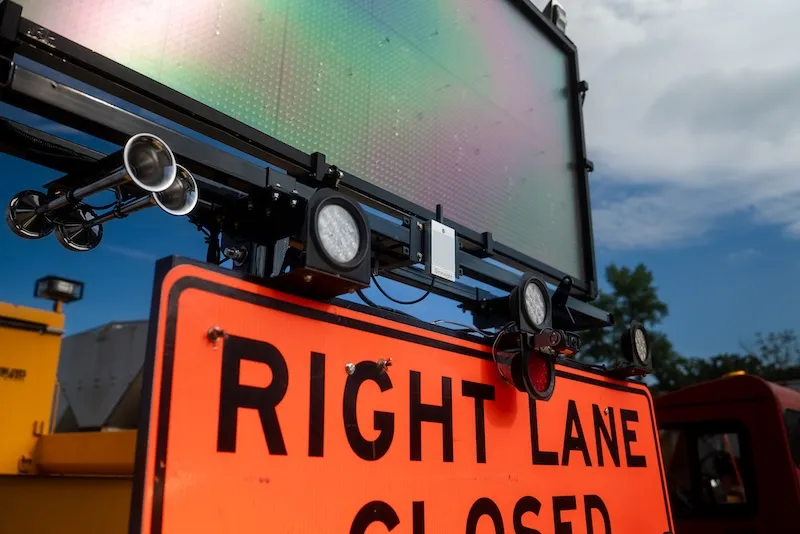
In partnership with the Missouri Department of Transportation, Omnisight has retrofitted attenuator trucks with proprietary Fusion Sensors to combat rising work zone fatalities caused by distracted driving and speeding.
These sensors use radar and video to detect threats in real time, automatically trigger warning systems (like horn blasts and illuminated signs), and log critical incident data for post-crash analysis. This cutting-edge technology enhances worker safety, improves alert accuracy, and empowers state agencies to refine safety protocols through data-driven insights, all while requiring minimal infrastructure changes
Watch HereOur FusionBLADE technology pairs HD3D radar with AI HD video analytics to create a comprehensive detection field across the work zone perimeter, tracking every vehicle and potential hazard in real time regardless of weather or lighting conditions.
This radar plus video fusion approach eliminates the blind spots inherent in single technology systems, delivering 100 degree backwards looking awareness aimed at oncoming traffic for faster response times and more accurate threat assessment in active construction and maintenance zones.
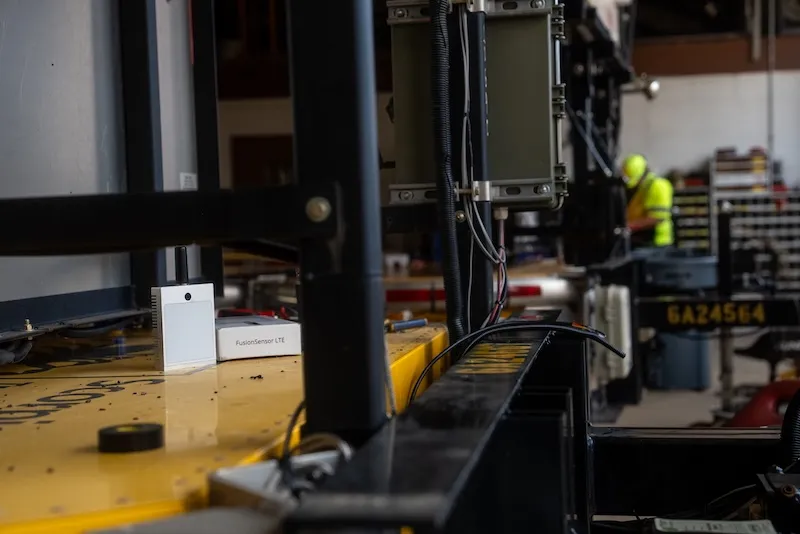
After a successful deployment, MoDOT sole sourced FusionBLADE and is retrofitting its attenuator truck fleet over the next 5 to 7 years. Read how the system was tuned on live Missouri work zones, from seconds-to-collision alert thresholds to targeted horn sound levels.
Intrusion Detection Technology
Purpose built for the most demanding construction environments, the FusionBLADE platform delivers HD3D radar plus AI HD video capabilities that conventional cameras and loop detectors simply cannot match.
FusionBLADE processes work zone data 20 times per second on the device edge, continuously monitoring the entire intrusion perimeter. Every vehicle, pedestrian, and piece of equipment is tracked in real time.
Omnisight's proprietary TrueEdge classification engine achieves 98.7% accuracy, distinguishing real threats from harmless activity. Alerts reach workers in under one second from initial detection through dynamic TMA aware alarm timing.
Work doesn't stop at night, and neither does FusionBLADE. HD3D radar based detection operates around the clock, maintaining full coverage during nighttime operations, shift changes, fog, and extended construction schedules.
Rain, fog, dust, snow, or direct sunlight that blind cameras and confuse LiDAR are handled seamlessly by the FusionBLADE radar first architecture. Engineered through months of MoDOT field testing for the harshest active work zone conditions.
Work Zone Analytics
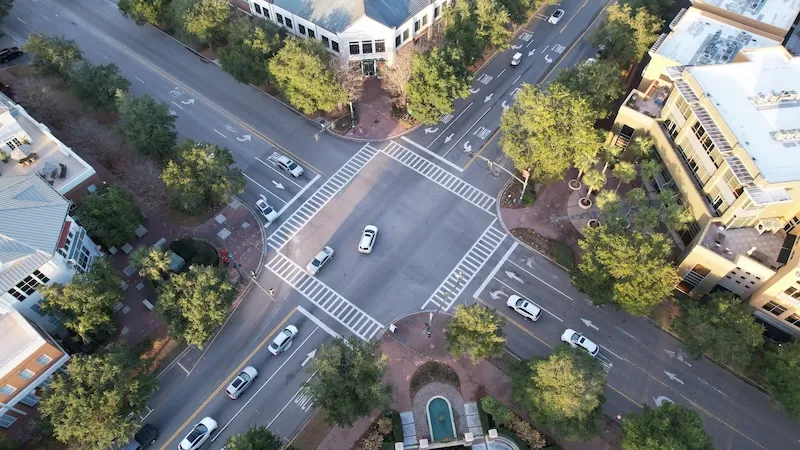
From static guesswork to predictive intelligence: how continuous data transforms work zone safety.
The Problem
Fixed signage and lane closures can't adapt to real-time conditions like weather, traffic surges, or worker movement.
The Insight
Cloud sensors and AI process billions of data points per second to detect anomalies and surface insights faster than human operators ever could.
The Shift
Real-time data redraws safety zones around workers, equipment, and traffic, adapting moment-by-moment to shifting conditions on site.
The Result
Crews stop incidents before they happen, turning every site into a continuously learning safety system that gets smarter with every shift.
Worker Safety Impact
The National Safety Council reports that in 2022, work zone crashes resulted in 891 fatalities and more than 37,000 injuries across the United States. Behind every statistic is a worker, a driver, a family forever changed.
Roughly one in five highway crashes is a secondary crash caused by the backup from the first incident. Faster detection and response cuts that number directly.
FusionSensor's sub-second detection-to-alert latency means TMC operators see the incident the moment it happens, not 30 seconds, 2 minutes, or 10 minutes later when CCTV catches up.
See how Omnisight's FusionBLADE technology can safeguard your crews and motorists with real time AI powered intrusion monitoring and TMA aware instant hazard alerts.
FusionBLADE (short for Backwards Looking Advanced Detection Engine) is an AI powered work zone safety sensor that uses HD3D radar fused with AI HD video to detect any vehicle that crosses into an active work zone perimeter. When intrusion happens, FusionBLADE triggers horn strobe alarms, dynamic message signs, and contractor safety platforms in under one second so flaggers and crews have time to react.
Detection to alert latency is under 100 milliseconds on device using TrueEdge processing. Alerts fire to local horn strobes, ATMS, variable message signs, and contractor mobile apps simultaneously so the entire crew is warned at the same moment regardless of where they are working in the zone.
Yes. HD3D radar based detection operates around the clock without dependence on visible light, so accuracy is identical at noon, dusk, midnight, fog, freezing rain, or snow. Most construction crashes happen at night and in low visibility, exactly when traditional cameras fail and FusionBLADE keeps watching.
During FusionBLADE installation, our team configures a precise alert zone that defines exactly which lanes and areas should trigger alarms. Vehicles in further away through lanes, traffic on adjacent roadways, or movement outside the active work zone never trigger alerts. The radar geometry is tuned per site so flaggers and crews only get notifications when something actually breaches the protected work zone perimeter.
Yes. Every FusionBLADE deployment automatically delivers a complete traffic study alongside intrusion detection. You receive FHWA vehicle classification, speed, lane position, and timestamp for every vehicle passing the work zone, broken out per lane. That gives DOT engineers and contractors hard data on driver behavior, speed compliance, and lane usage in active construction without paying for a separate traffic study.
FusionBLADE went through months of side by side field testing with MoDOT crews on live work zones, iterating firmware based on operator feedback and reviewing, logging, adjusting, and re testing every parameter. The hardest part was tuning exactly when the horn and strobe should fire. The trigger is calculated dynamically from each vehicle's speed and its distance to the truck mounted attenuator (TMA), so a 70 mph driver is flagged earlier than a 35 mph one and the alarm fires at the exact moment a crew still has time to move.
Smart work zones use sensors, automated alerts, and real-time traffic data to protect crews and motorists in active construction areas. Instead of relying on cones and static signs alone, the zone itself detects intrusions, measures speeds, and warns workers the moment a threat appears.
A sensor watches the traffic approaching the work zone perimeter. When a vehicle crosses into the protected area, the system fires horn and strobe alarms and pushes alerts to crews and platforms in under a second, timed by the vehicle's speed and distance.
A TMA is a crash cushion mounted on a shadow truck that absorbs impact energy and protects workers ahead of it. FusionBLADE mounts on the attenuator truck and times its alarms dynamically based on each vehicle's speed and distance to the TMA.
With layered defenses: real-time intrusion alarms, speed monitoring, high-visibility warnings, and data on driver behavior that lets agencies fix the riskiest setups. Work zone crashes caused 891 deaths and more than 37,000 injuries in the US in 2022, and most are preventable.
Radar-based detection, because it performs identically in darkness, fog, rain, and snow. Most work zone fatalities involve night work or low visibility, exactly the conditions where camera-only systems degrade.