
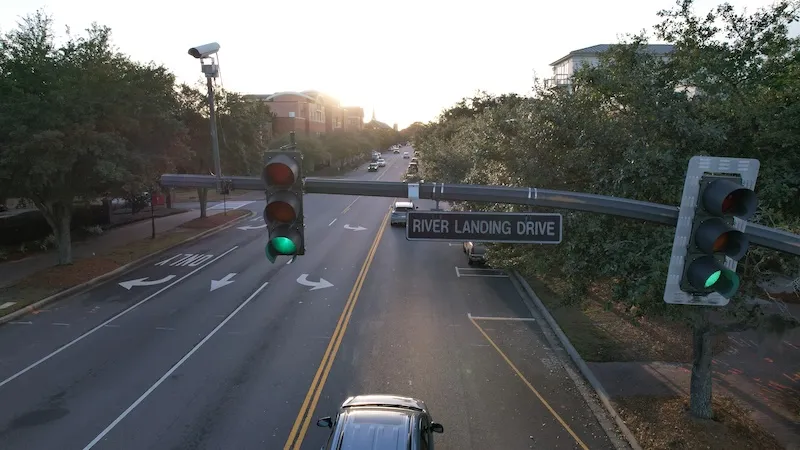
Dynamic All-Red Extension (DARE)
DARE is only as good as the detection feeding it. FusionSensor fuses HD3D radar with AI-powered video to track every approaching vehicle, classify it to FHWA 13-bin standards, predict stop or go, and hand your controller one clean DARE call per approach.
Red-Light Running at Signals
Dynamic all-red extension is proven and inexpensive. The weak link has always been upstream detection: loops and speed-only radar guess at who will run the red. Fusing HD3D radar with AI-powered video removes the guesswork.
An inductive loop reports presence at one spot in the pavement. To guess whether a vehicle can stop, agencies chain two to four advance loops per approach, each a sawcut, a cable run, and a controller input.
Advance radar flags a fast return, but it cannot classify the vehicle or confirm it is tracking toward the stop bar. Every borderline reading becomes an unnecessary extension, or a missed one.
Each DARE zone traditionally needs its own detector channel. Multiply by approaches and the cabinet is out of inputs, with more to wire, test, and maintain at every signal.
Agencies worry that frequent extensions add delay or teach drivers to expect them. Rural DARE research shows minimal delay and no habituation, but that holds only when the trigger is accurate.
The Research
North Carolina DOT has run dynamic all-red extension at rural, isolated signals since 2011. When advance detection predicts a red-light runner, the controller extends the all-red interval for a few seconds so conflicting traffic is held until the runner clears.
FHWA’s CMF Clearinghouse lists a crash modification factor of 0.65 for sites where DARE was the sole treatment: 35% fewer target red-light-running crashes, statistically significant at the 95% confidence level. They show what the treatment can do with the detection of the time.
Search the CMF Clearinghouse
Those deployments relied on inductive loops and advance radar on the mainline approach. FusionSensor fuses two sensors into one view: HD3D radar measures speed, distance, and deceleration for every vehicle, while AI-powered video confirms what it is and classifies it to the FHWA 13-bin scheme.
Together they produce the input a DARE algorithm has always needed and never quite had: a per-vehicle stop/go prediction that accounts for vehicle class, delivered as a single call per approach.
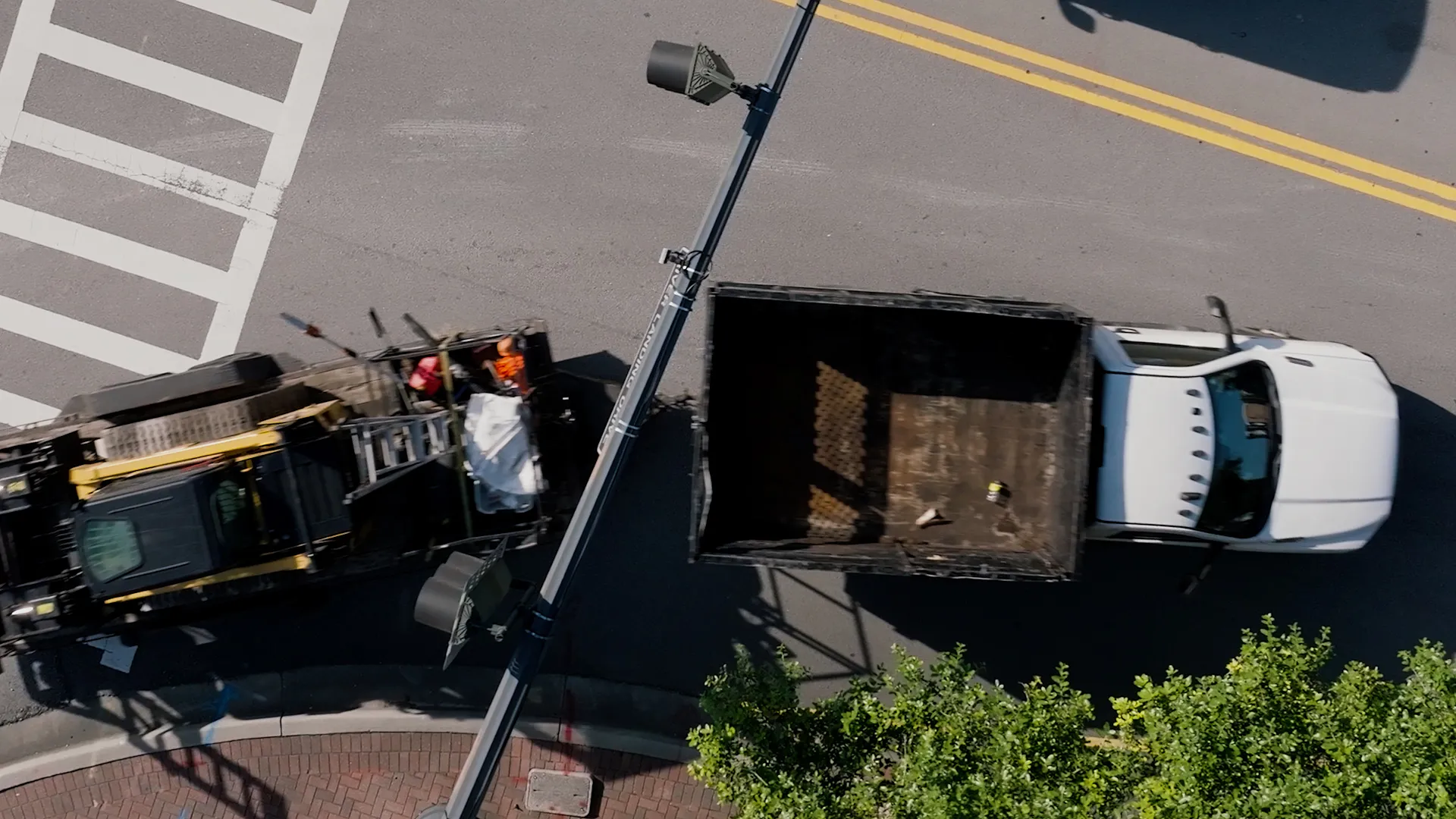
Radar + Video Fusion for DARE
HD3D radar tracks speed and distance to the stop bar for every vehicle on the approach. AI-powered video classifies each one to FHWA 13-bin standards. Fused on the device, they produce a stop/go prediction and one DARE call per approach.
HD3D radar reports each vehicle’s speed, range, and deceleration to the stop bar many times a second, through rain, fog, and darkness, instead of a presence pulse at a fixed point.
At yellow onset the sensor evaluates whether each tracked vehicle can comfortably stop from its measured speed, deceleration, and distance, and flags the ones that cannot. Processing happens on the device, with no cloud round-trip.
AI-powered video classifies every vehicle to the FHWA 13-bin scheme. A loaded truck’s stopping distance is not a sedan’s, so the prediction accounts for class, and fusion keeps a stray radar return from triggering an extension.
All DARE zones on an approach collapse into a single detection output over Contact Closure, NTCIP, or SDLC, so the DARE feature in controllers such as McCain’s can use FusionSensor without a new integration project.
Red-Light-Running Intervention
DARE is only as good as the call it receives. Fusing HD3D radar with AI-powered video turns a point-presence guess into a tracked, classified prediction the controller can trust.
The Problem
Loops and advance radar report that something passed a spot. The controller has to infer from timing alone whether that vehicle will stop.
The Insight
Continuous speed and distance from HD3D radar plus FHWA 13-bin classification from AI-powered video let the sensor decide stop or go before the controller has to.
The Shift
FusionSensor sends a single DARE call over Contact Closure, NTCIP, or SDLC the moment a runner is predicted, replacing two to four zone inputs.
The Result
Accurate triggers mean all-red is extended for real runners, keeping added delay minimal and avoiding driver habituation.
Intersection Safety Impact
Right-angle crashes from red-light running happen at full approach speed with little protection for occupants. DARE adds a few seconds of all-red exactly when a runner is predicted, and it has a documented safety record.
IIHS reports that more than 1,000 people are killed each year in US crashes involving red-light running, and more than 100,000 are injured.
FHWA’s CMF Clearinghouse lists a CMF of 0.65 for dynamic all-red extension as the sole treatment, a 35% reduction in target red-light-running crashes, statistically significant at 95% confidence.
See how FusionSensor predicts red-light runners and delivers one clean DARE call per approach to your controller, and how it fits a safety-grant-funded detection upgrade.
DARE is a signal controller feature that briefly extends the all-red clearance interval when upstream detection predicts a vehicle will run the red. Conflicting traffic is held a few seconds longer so the runner clears the intersection before cross traffic gets green. NCDOT has used it at rural, isolated signals since 2011, and the concept predates today’s controller vendors.
Independent research, not an Omnisight deployment: FHWA’s CMF Clearinghouse lists a crash modification factor of 0.65 for sites where DARE was the sole treatment, a 35% reduction in target red-light-running crashes, statistically significant at the 95% confidence level. NCDOT has run DARE since 2011.
Past research on rural applications shows minimal added delay and no driver habituation. Because the extension only fires when a runner is predicted, accurate detection is what keeps extensions rare.
DARE depends entirely on reliable upstream detection that can identify a potential red-light runner. Historically that has meant inductive loops or advance radar on the mainline approach. FusionSensor fuses HD3D radar speed and distance with AI-powered video that classifies each vehicle to FHWA 13-bin standards, producing a stop/go prediction, which is exactly the input a DARE algorithm needs.
FusionSensor outputs over Contact Closure, NTCIP, or SDLC. All DARE zones on an approach are combined into a single detection input, so the controller does not need two to four inputs per approach.
Controller vendors explicitly tie DARE to justifying detection and cabinet upgrades through safety grant funding, and the documented crash reduction supports that case. Talk to us about how a FusionSensor detection upgrade fits a safety-funded project.