
Most intersection detection specs are written by copying the last one. That is how a 2026 adaptive signal project ends up with detection requirements written for a 2008 actuated signal: a presence zone at the stop bar, a camera or a loop, and not much else. The adaptive controller gets installed, the detection cannot feed it what it needs, and the corridor never hits the numbers in the business case.
This checklist is for the engineer or consultant writing the next one. It covers what to require, how to make the requirements testable, and what to ask every vendor before the shortlist. If you want the background on why detection decides adaptive performance, read why adaptive signals underperform first.
Coverage on every approach and every phase. Require stop-bar presence and advance detection on every vehicle approach, with no phase left on recall. Oregon DOT's signal design manual now requires detection on all vehicle phases so the agency can run performance measures, and it is the right baseline for adaptive control too.
Advance detection that reaches the dilemma zone. Specify the upstream range in feet or seconds of travel time at the posted speed, not just the word advance. FHWA-sponsored research used a 400-foot zone and defined the dilemma zone as six to two seconds from the stop line. Your number depends on approach speed, but it should be a number.
Per-lane data. Require presence, count, and occupancy by lane, not by approach. A through lane and a left-turn pocket are different demands, and an adaptive controller that cannot tell them apart will misallocate green on every cycle.
Turning movement counts. Require the detector to report turning movements by approach and interval. This is what lets the controller set splits from actual movements, and it is the same data you would otherwise pay a consultant to collect for a traffic study.
Vehicle classification. Require classification to at least the light, heavy, bus, and motorcycle level, and ask whether the system can report FHWA 13-class counts. Clearance times and truck-heavy corridors depend on it, and the counts feed your pavement and freight programs for free.
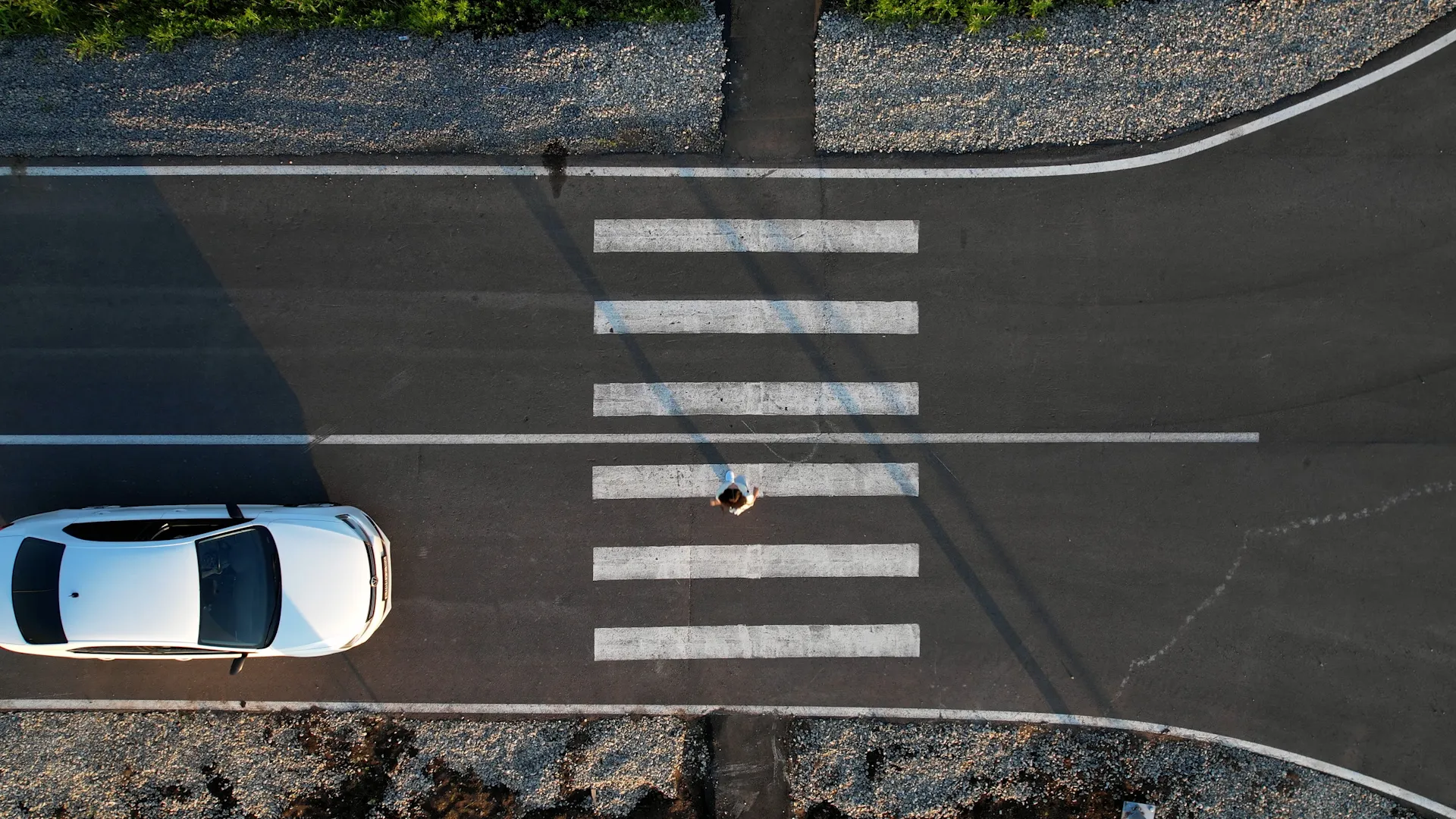
Pedestrian and cyclist detection. Require detection and classification of pedestrians and cyclists in the crosswalk and on the approach, independent of the push button, with the ability to place a pedestrian call and extend clearance when someone is still in the crosswalk. This is where Vision Zero commitments get real.
Stated accuracy, by condition. Accuracy without a condition is marketing. Require count accuracy, false-call rate, and missed-call rate reported separately for day, night, rain, and fog. A University of Idaho evaluation found detection performance degraded at night and in adverse weather across most systems, with radar and hybrid systems the most accurate. The spec should make the vendor show you their numbers in the bad conditions, not the average.
Latency and local processing. Require detection decisions to be made on the device and delivered to the controller in well under a second, with no dependence on a cloud round trip or a network link to place a call. If the fiber goes down, the intersection should keep detecting.
Open outputs. Require standard controller interfaces (contact closure or SDLC to the cabinet, NTCIP for data) and high-resolution event data suitable for automated traffic signal performance measures. Avoid any detector that only talks to one vendor's controller.
Installation without pavement cuts. Require mounting on existing mast arms or poles, with a stated power budget and no lane closures for installation or maintenance. FHWA's Traffic Detector Handbook is blunt that installation quality drives detector life and maintenance, and nothing in the pavement is the surest way to stay out of it.
Remote diagnostics and health reporting. Require the detector to report its own health, flag degraded performance, and support remote configuration and firmware updates. A detector that fails silently is the failure mode that costs the most.
Write the acceptance test into the spec. A 72-hour side-by-side against manual counts or a ground-truth video review, covering at least one night and one rain event, reporting count accuracy and false and missed calls by lane and by condition. Set the pass threshold before the test, not after. Agencies that do this end up with detection that performs. Agencies that accept a daytime demo end up writing this spec again in three years.
FusionSensor was designed against this list. One unit per approach fuses HD3D radar with HD video, so it delivers stop-bar presence, advance detection into the dilemma zone, per-lane counts and occupancy, turning movements, and 13-class vehicle classification from a single device on the existing mast arm. It detects and classifies pedestrians and cyclists without a push button. Detection runs on the device with TrueEdge, so calls reach the controller in real time and keep coming if the network drops. It reports in the formats agencies already use, including NTCIP, draws about 15 watts, and goes in with nothing cut into the pavement. Accuracy is 98.7 percent across road-user classes, and we will show you the data by condition, because that is the only version that matters.
See how it fits into adaptive signal timing, read what cities actually save once the detection is right, or request a demo and bring us your worst intersection.
Subscribe to The Edge Brief for monthly field notes, deployment stories, and product updates.
Subscribe →